LEE LEE NAM l Beholding the Formless, Hearing the Soundless
Hakgojae Gallery presents Beholding the Formless, Hearing the Soundless, a solo exhibition by LEE LEE NAM (b. 1969), from September 23 to October 24, 2026. Marking the artist’s return to Hakgojae Gallery since 2009, the exhibition takes a step beyond his longstanding Image Transformation series, turning its attention toward movement and life itself, before an image takes form. It represents a shift toward investigating the state that precedes the birth of an image.
Building on his ongoing experiments with expanding the range of human perception through technology, LEE takes as his point of departure the movements of living organisms that remain beyond the limits of unaided vision. Bringing together works across various media, the exhibition leads viewers toward a realm that lies beyond the visible.
Beholding the Formless, Hearing the Soundless originates in an ancient maxim that speaks of seeing what lies beyond form and hearing what lies beyond sound. This also resonates with Psalm 19, which speaks of a voice that reaches throughout the earth even though “there is no speech, nor are there words; their voice is not heard.” It suggests a way of seeing and hearing forms of existence that cannot be directly perceived through the senses.
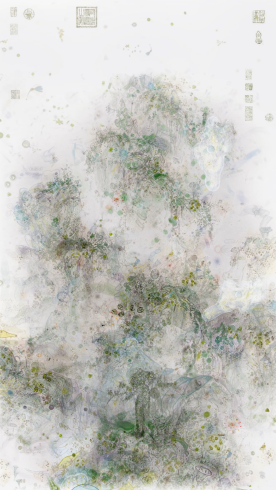
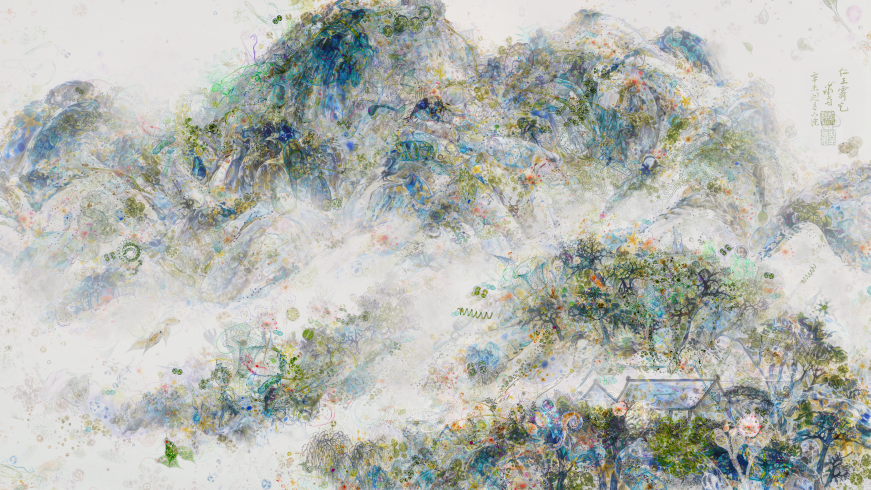
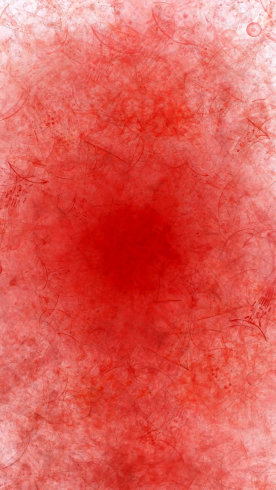
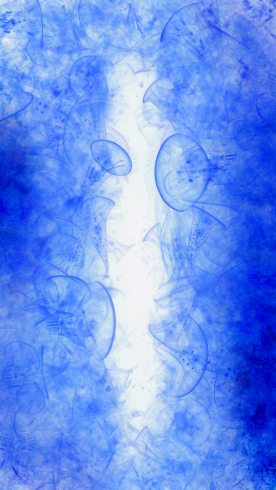
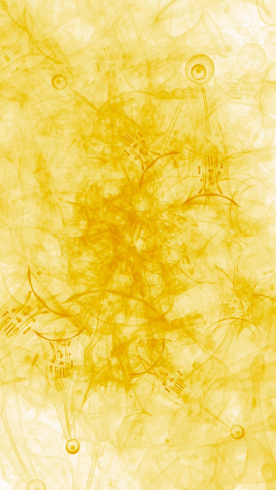
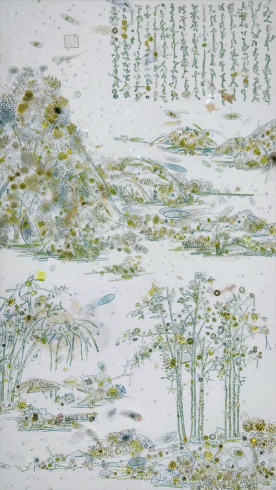
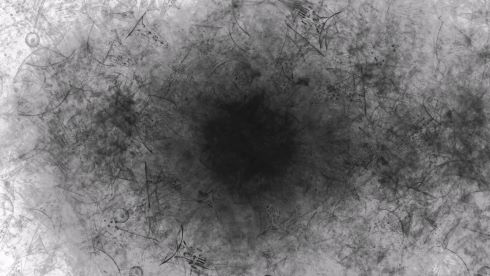
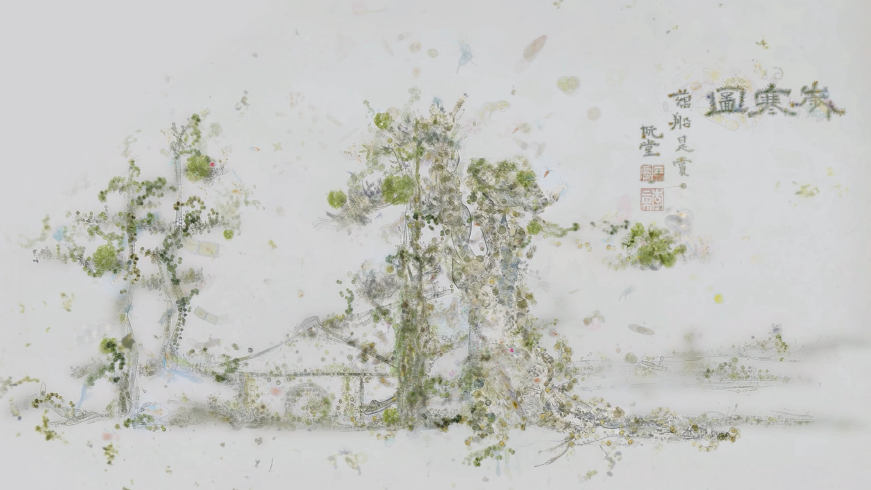
The exhibition begins with the premise that something being imperceptible to the eye does not mean that it is absent from existence. Even beyond the limits of human perception, countless forms of life and matter are continuously being generated and transformed. LEE LEE NAM collected water directly from Yongso Waterfall and observed it under a microscope, encountering a microscopic realm that the naked eye can never reach. The waterway that begins at Yongso Waterfall and flows into the Yeongsan River serves both as a point of departure for contemplating the origins of life and as a place through which the artist retraces his own roots. Following traces of tiny forms of life that are born, move, and disappear within a single drop of water, he asks where life and existence come from and where they are headed. The enlarged forms and movements of organisms, together with the traces created by their collective formations, evoke the ridgelines of mountain ranges. As familiar surfaces—at times flowing fluidly, at others dispersing like clouds or mist—are examined more closely, another texture gradually emerges, composed of cells and particles. This also brings about a shift in the way the artist approaches sansuhwa (山水), or traditional landscape painting, which he has explored throughout his practice. Here, landscape does not remain confined to the reproduction of a completed vista. Within the forms spread before us are subtle movements, transformations of matter, light, time, and other elements that are difficult to perceive.
The macro and the micro are not separate realms, but rather different layers that emerge when the world is observed at different scales. The artist juxtaposes the imagery of traditional painting with microscopic forms captured through a microscope, exploring what lies beneath what we commonly call a “landscape.” A scene that appears from a distance as mountains and ridgelines disperses, upon closer inspection, into traces of countless organisms and particles, revealing different aspects according to scale and distance. The “formlessness” in the exhibition title points precisely to this state: a fluid moment before something becomes fixed as a singular form. Likewise, “soundlessness” does not signify absolute silence. Waves continue beyond the threshold of human hearing, and the fact that a phenomenon cannot be sensed does not mean that the phenomenon itself ceases to exist. The fact that something lies beyond the reach of the eye or ear introduces a rupture into a worldview that has defined reality only within the limits of what humans are capable of perceiving. Beholding the Formless, Hearing the Soundless therefore does not simply enlarge or visualize what is invisible. Questions that begin with persistent observation extend outward into networks of relations formed through the entanglement of humans and non-humans, nature and technology. The deeper one enters the textures of the microscopic world, the more expansive the horizon of thought becomes. For LEE LEE NAM, “beholding the formless and hearing the soundless” is an attitude that moves beyond the boundaries of familiar perception, seeking to bring into view forms of existence that have previously gone unnoticed.
-


-
DATE
2026.09.23 - 2026.10.24
-
ARTIST
-
PRESS RELEASE
Floating Landscape - Early Spring NO. 01
2026
Pigment print on Jangji paper, Wood frame
170x130cm
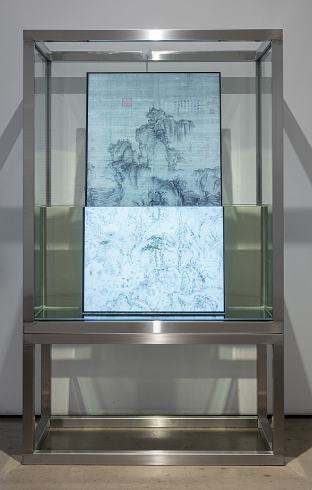
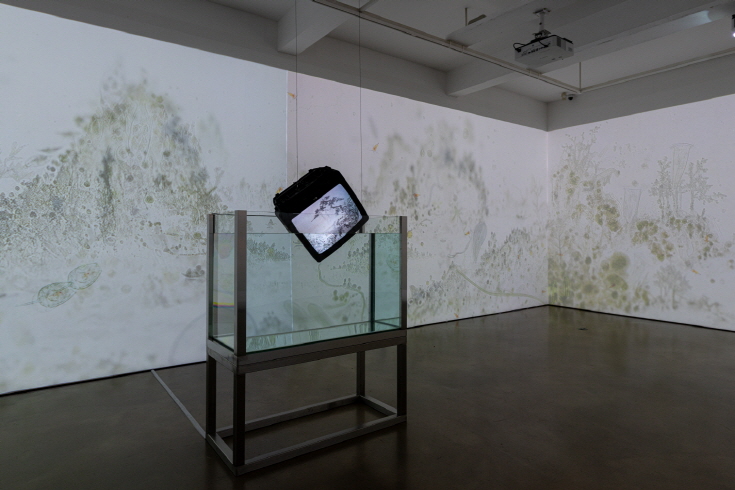
Two Worlds
2026
Media installation, Water tank, Water, Display, Stainless steel, Digital video, 9min 23sec
200x60x120cm
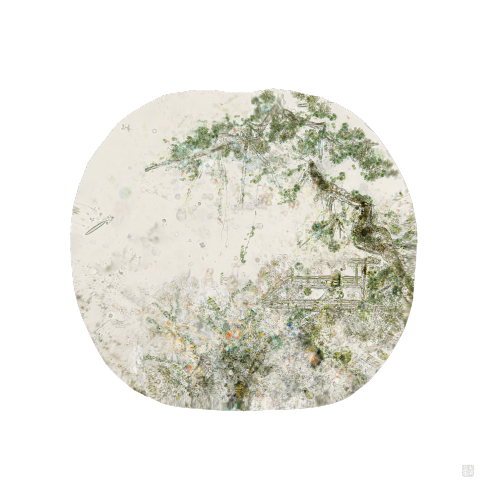
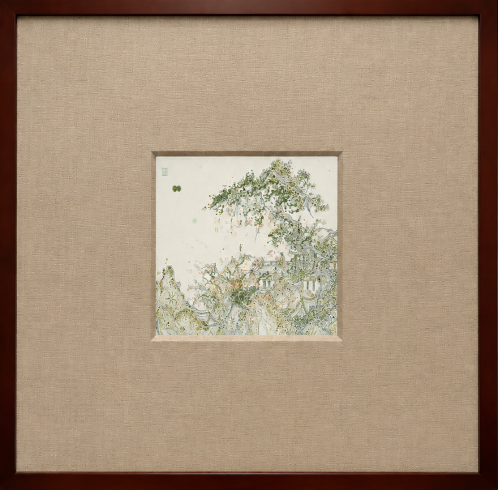
Floating Landscape - Figure under a Pine Tree NO. 02
2026
Acrylic paint on acrylic panel
120x120cm
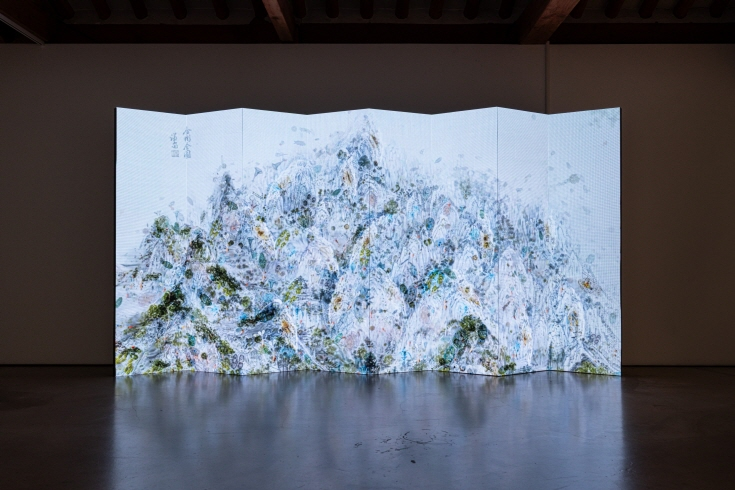
Microcosmic Landscape - Geumgangsan
2026
LED Display, Single-channel video, Sound, 9min 23sec
220x480cm
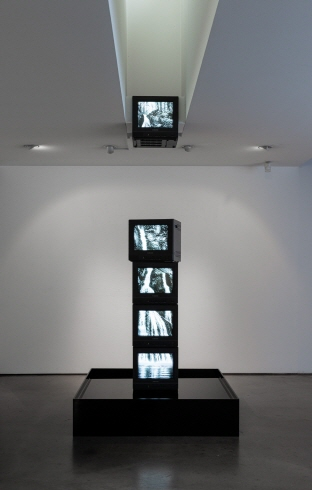
One Water, Many Landscapes - Yongso
2026
CRT Monitors, Digital video, Sound, Steel structure, 9min 23sec
120x120x236.5cm
Microcosmic Landscape - Inwang Jesaekdo
2026
LED Monitor 75
84x146.5cm
Microcosmic Landscape - Early Spring NO.2
2026
Single-channel video, LED Display 75”, 9min 23sec
170.5x97.9cm
Move Sound Image - Common World
2026
CRT TV, Water tank, Water, 8-Channel projection mapping, Digital video, Sound, Stainless steel structure, 9min 23sec
installation
Microcosmic Landscape - Fisherman on a Snowy Stream
2026
Single-channel video, LED Display 75”, 9min 23sec
170.5x97.9cm
Microcosmic Landscape - Travelers among Autumn Mountains
2026
Single-channel video, LED Display 75”, 9min 23sec
170.5x97.9cm
Microcosmic Landscape - Early Spring NO.1
2026
Single-channel video, LED Display 75”, 9min 23sec
170.5x97.9cm
Microcosmic Landscape - Riverside Pavilion and Mountain Hues
2026
Single-channel video, LED Display 75”, 9min 23sec
170.5x97.9cm
Microcosmic Landscape - Lofty Recluses in a Mountain Retreat
2029
Single-channel video, LED Display 75”, 9min 23sec
170.5x97.9cm
Microcosmic Landscape - Winter Scene
2026
Single-channel video, LED Display 85", 9min 23sec
109.3x191cm
Microcosmic Landscape - Figure under a Pine Tree
2026
Single-channel video, Monitor 19", Wood frame, 9min 23sec
60x60cm