Prev
Next
LEE Jong-gu | Pensive : 思惟
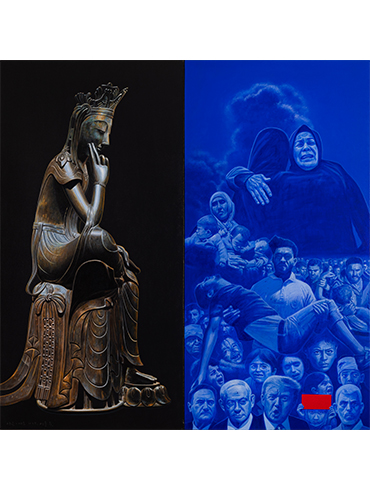
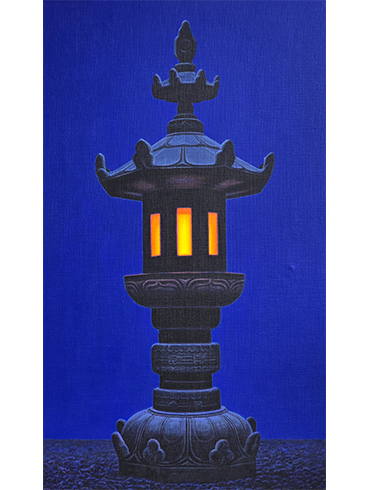
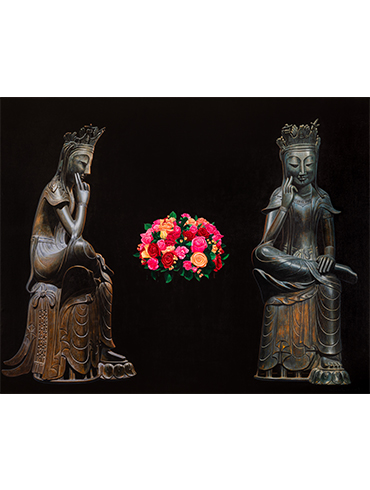
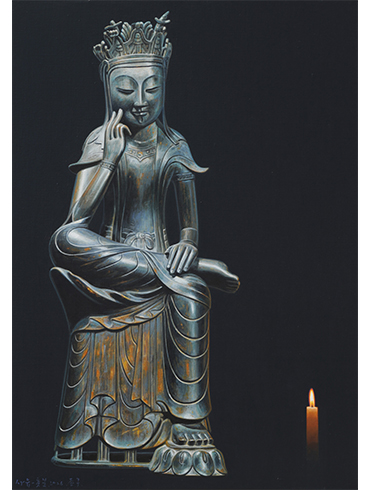
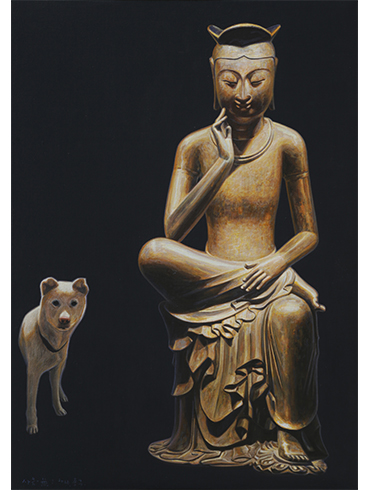
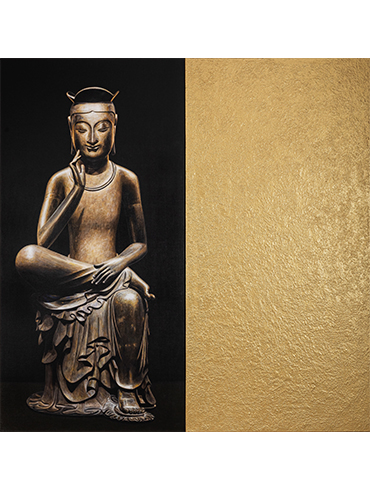
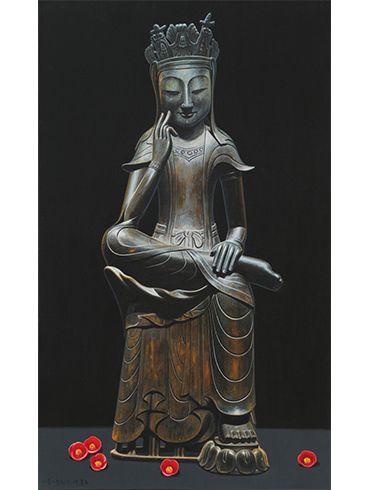
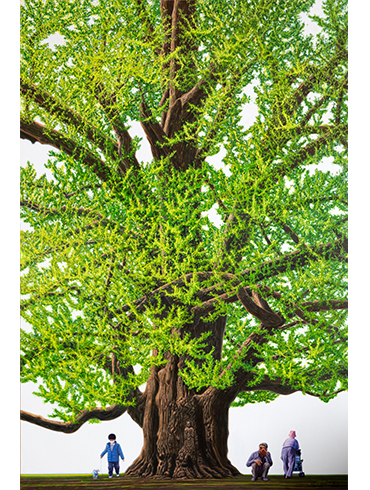
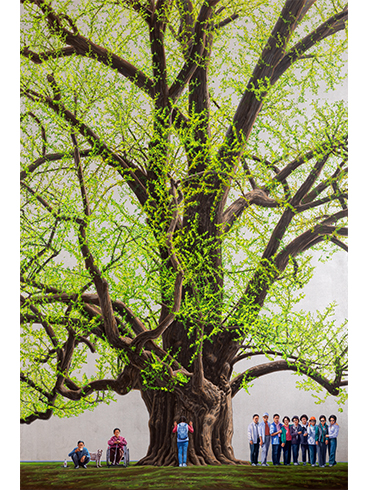
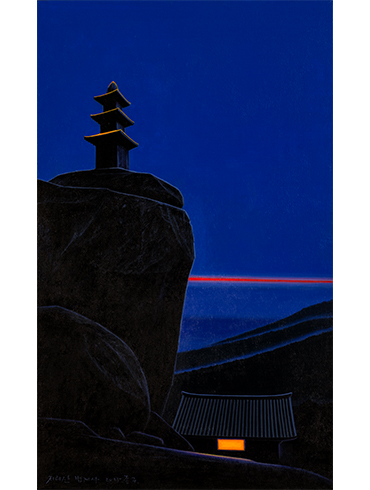
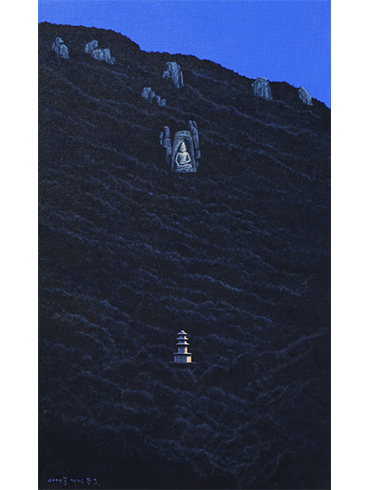
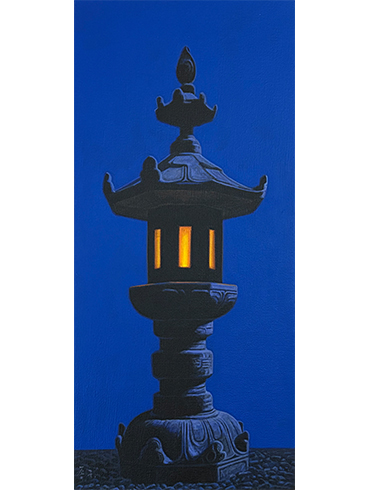
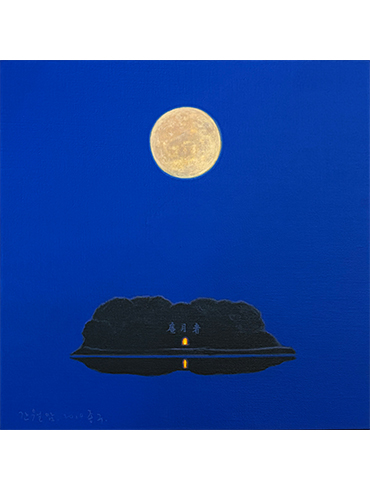
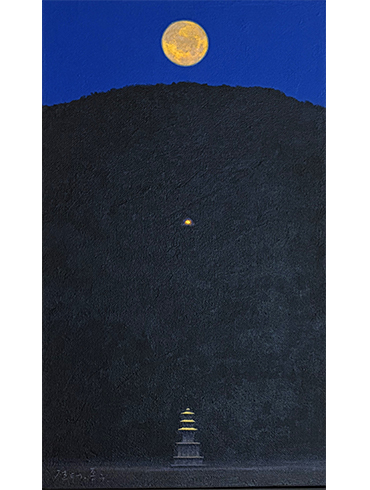
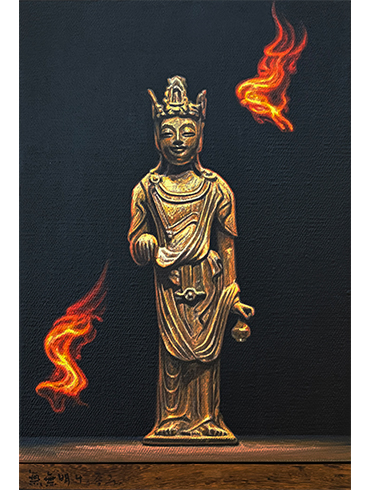
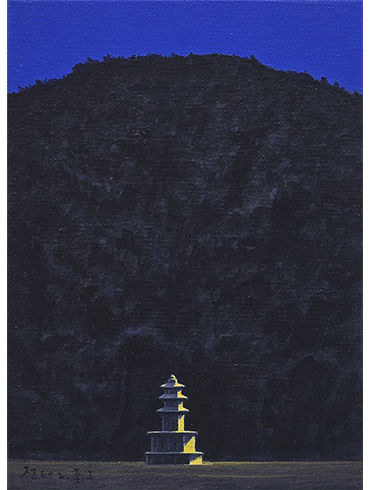
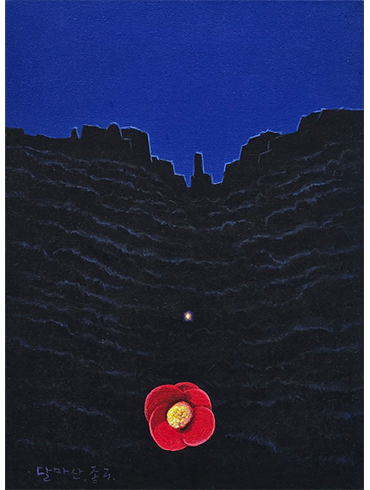
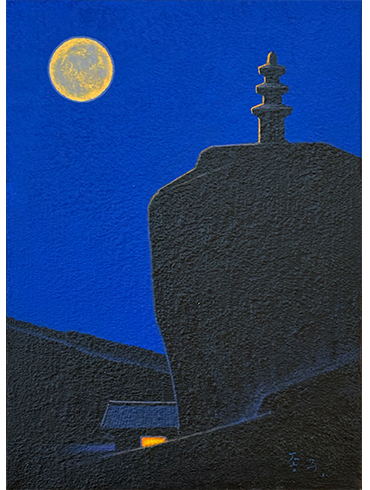
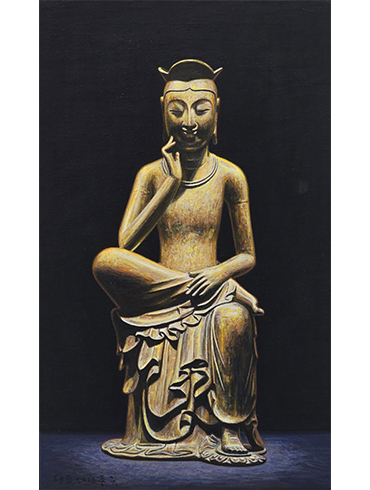
Hakgojae Gallery presents 《Pensive : 思惟》, a solo exhibition by LEE Jong-gu, on view from May 20 to June 20, 2026. Centered on the image of the Pensive Bodhisattva, the exhibition explores the tension between contemporary reality and the ways in which it is perceived and contemplated. Turning his gaze inward after years of confronting the external world, the artist proposes a form of “contemplative realism” through which life may be reflected upon and healed. Grounded in the social realist concerns that have shaped his practice since the 1980s, LEE now expands his artistic horizon toward questions of human existence and universality. The exhibition offers a focused examination of an oeuvre that seeks to move beyond social agendas toward the spirituality of life and peace.
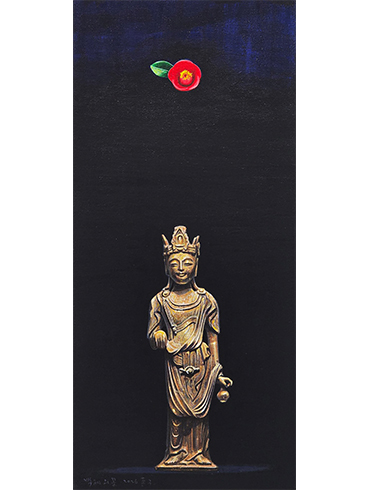
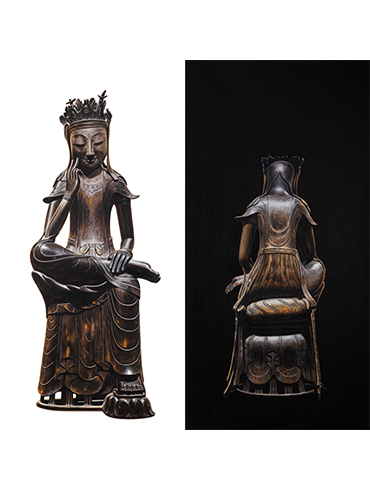
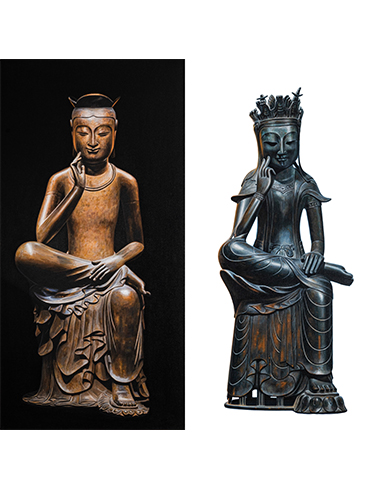
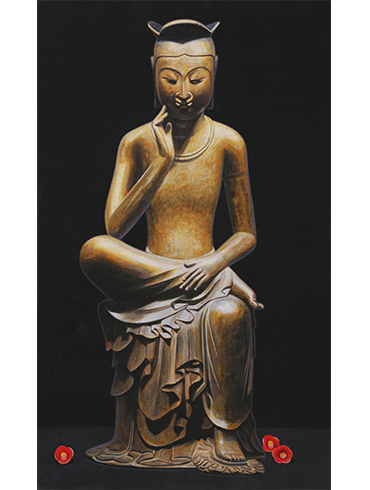
Since the 1980s, LEE Jong-gu has consistently explored the realities of farmers and rural communities at the center of the Korean Minjung Art movement. His portraits of farmers painted on government-issued rice sacks—works that directly exposed the hidden consequences of industrialization and urbanization—have become landmark images visualizing the structural contradictions of Korean society. Yet his paintings have never remained mere representations of local sentiment. Contemporary social events have continually appeared in his canvases as vivid landscapes of the times. In recent years, however, experiences of isolation during the pandemic, an acute awareness of mortality, and the life transition of retirement have led his practice toward a more existential and ontological direction. Time spent walking, contemplating through the body, and undertaking pilgrimages to Buddhist temples opened a new way of confronting human existence and life itself. The gaze once directed outward toward social reality gradually turned inward, toward the self and the temporality of inner experience. Around this time, LEE encountered the Pensive Bodhisattva in A Room of Quiet Contemplation at the National Museum of Korea, discovering in it not merely a religious icon, but an attitude of being that contemplates the world in profound silence.
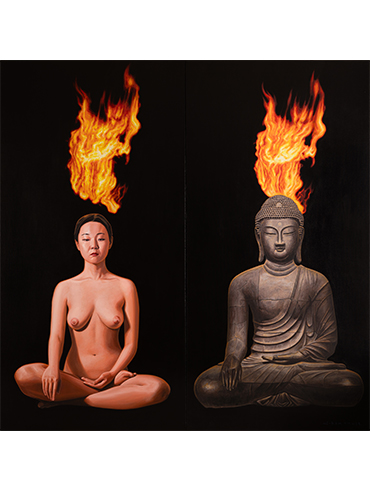
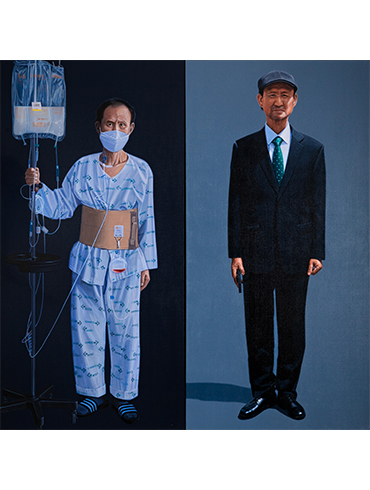
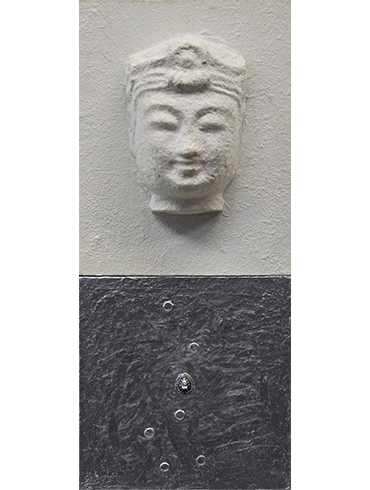
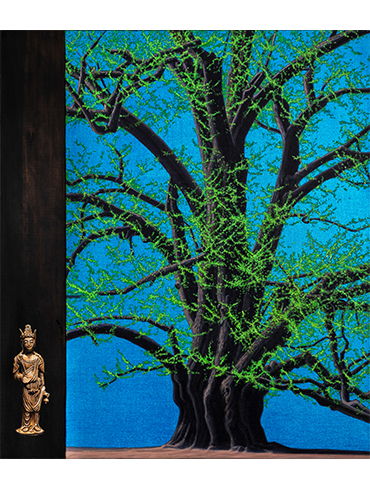
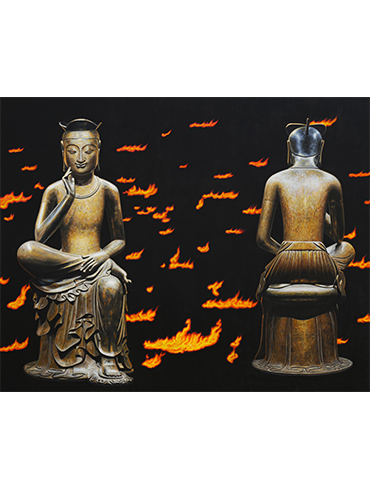
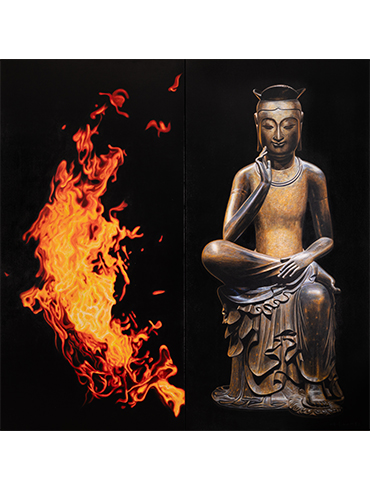
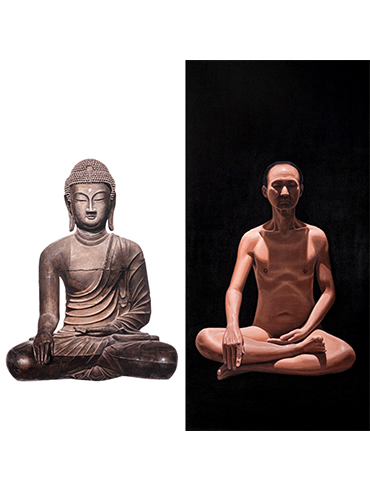
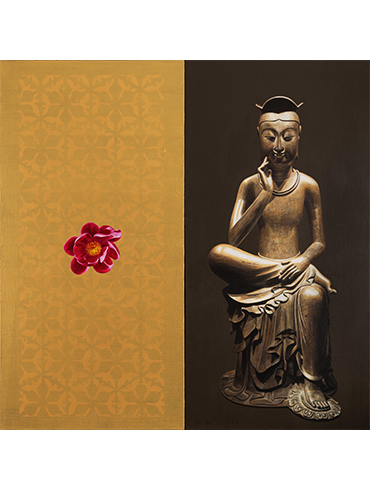
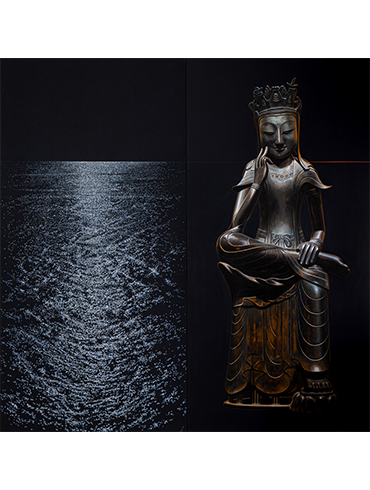
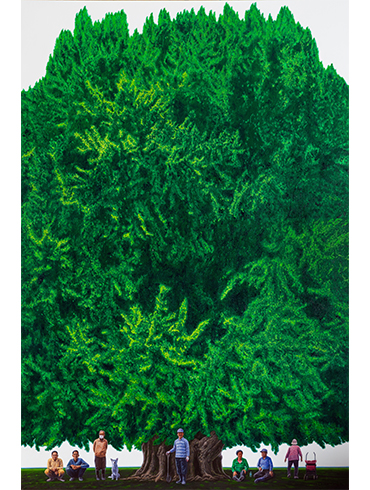
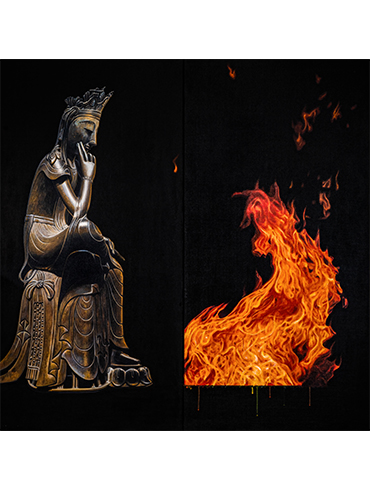
At the heart of the exhibition lies what LEE calls “embodied contemplation,” a mode of reflection that does not remain within abstract meditation. Instead, it lays bare existential processes inscribed upon the body through illness, aging, walking, and breathing. By placing the figure of the Pensive Bodhisattva alongside secular landscapes, LEE translates the Buddhist philosophy of Non-Duality (Bul-I, 不二) into painterly form. His works suggest that life and death, suffering and peace, humanity and nature are not separate entities, but interdependent presences engaged in perpetual circulation.
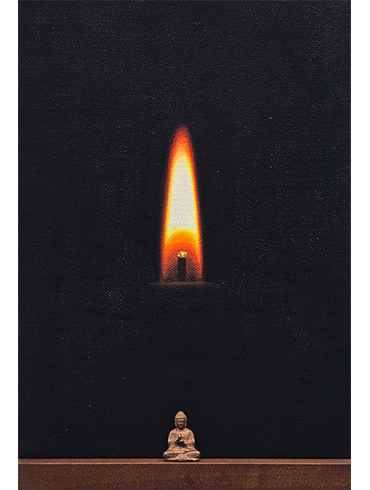
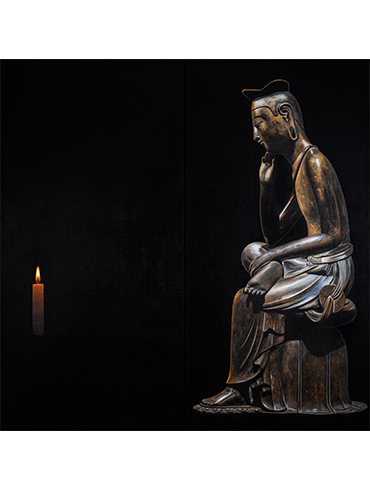
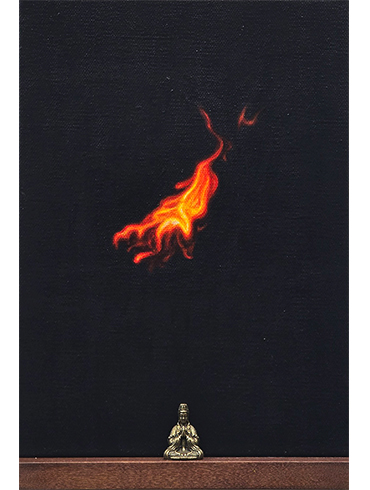
The visual structure of the paintings reinforces this philosophical stance. Beside the deeply meditative Bodhisattva appear waves, flames, vulnerable bodies, and crowds, creating a palpable visual tension. Here, the Pensive Bodhisattva transcends its status as a sacred figure and becomes the very gaze of contemplation silently observing a turbulent reality. By juxtaposing sublime Buddhist imagery with stark corporeality, LEE underscores that the sacred and the profane, spirit and flesh, can never truly be separated.
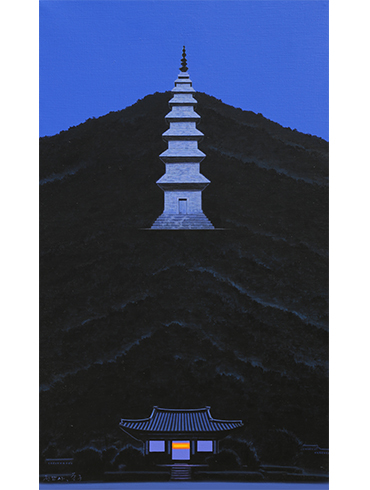
Titles such as Beyond Ignorance, Non-Duality (Bul-I), The Defiled Land, and Bhumisparsha Mudra invoke Buddhist concepts without remaining confined to doctrinal representation. Rather, they summon the fractured landscapes of a contemporary world marked by war, disaster, hatred, and conflict, questioning the existential condition of humanity amid chaos. Instead of depicting specific events directly, LEE evokes the anxieties and violence of the age through metaphorical resonance. Rejecting emotional excess and dramatic spectacle, he maintains a measured distance and profound silence, allowing viewers to encounter the works within their own contemplative stillness.
Pensive : 思惟 illuminates the moment in which LEE Jong-gu’s long engagement with social realism expands into a deeper inquiry into the essence of human existence. If his earlier works were relentless records exposing the contradictions of their era, his recent paintings shift their center of gravity toward questions concerning the origins of life itself. His paintings now move beyond representing the surface of events and enter a field of contemplation that investigates the very ways human beings perceive, remember, and inhabit the world. Beneath the silent gaze of the Pensive Bodhisattva, viewers encounter landscapes where bodily finitude, traces of existence, and flickering passages of light and darkness intersect. Within this charged distance, LEE poses a fundamental question: What are we truly witnessing, and what kind of world are we living in?
LEE Jong-gu (b. 1954) is a seminal figure in Korean social realism. During the 1980s Minjung Art movement, he subverted the pastoral nostalgia of rural life by painting farmers' portraits on government rice sacks, transforming the countryside into a site of socio-political discourse.
His work confronts the alienated labor and dissolving communities under capitalism, rendering the rugged faces of farmers as visual records of modern Korean history. Recently, LEE has expanded this critical spirit toward ecology and the sanctity of life. By contemplating the cycles of the earth and existence, his practice serves as a rigorous inquiry into how art can ethically engage with reality to affirm human dignity.
LEE Jong-gu (b. 1954) was born in Seosan, South Chungcheong Province. He received his B.F.A. in Painting from Chung-Ang University and an M.F.A. in Art Education from Inha University. He subsequently served as a professor of Fine Arts at Chung-Ang University and later as President of the Incheon Foundation for Arts and Culture.
His major solo exhibitions include 《Pensive : 思惟》 (2026, Hakgojae Gallery, Seoul, Korea), 《Agora_Spring Is Here》 (2018, Hakgojae Gallery, Seoul, Korea), 《Woohyun Arts Prize Winning Exhibition》 (2010, Incheon, Incheon Art Platform, Korea) and 《Artist of the Year 2005 – Lee Jong-gu》 (2005, MMCA, Gwacheon, Korea).
His major group exhibitions include 《Beneath Technology: Scenes at the Threshold》 (2026, Seoul Museum of Art, Seoul, Korea), 《On the Ground, Beyond the Wind》 (2025, Dangjin Culture & Art Center, Dangjin, Korea) 《Lineages: Korean Art at The Met》 (2024, The Metropolitan Museum of Art, New York, US), 《Before the Wind》 (2021, Suwon Museum of Art, Suwon, Korea), 《The Square: Art and Society in Korea》 (2020, MMCA, Gwacheon, Korea), 《Exhibition on Peace and Human Rights in East Asia for 70th Anniversary of 4・3 - From Silence to Shouting》 (2018, Jeju 4・3 Peace Memorial Hall, Jeju, Korea), 《Keyword Korean Art 2017 Plaza Arts: From Torch to Candlelight》 (2017, Jeju Museum of Art, Jeju, Korea), 《Commemorative Exhibition of the 70th Anniversary of Liberation: the Great Journey with the Citizens Uproarious, Heated, Inundated》 (2015, MMCA, Seoul, Korea).
Artist of the Year award from the Gana Art Prize (Korea), the Woohyun from the Incheon Foundation for Arts and Culture (Korea), and both the 2nd Prize and Special Selection at the JoongAng Fine Arts Prize (Korea). His works are represented in major public collections, National Museum of Modern and Contemporary Art, Seoul Museum of Art, Daejeon Museum of Art, Jeonbuk Museum of Art, and Jeju Museum of Art, etc.